Wondering if a painting is any good? You are far from the only one. Even those who know art can feel unsure when looking at one.
A ruler never fits every artwork. "Good" shifts based on craft, what it means, yet also how someone feels about it—grasp that mix, and your confidence grows when looking at paintings, sculptures, or anything made by hand.
1. The Foundation of Skill
What lets an artist bring ideas to life? That is skill. It shows how well they handle tools, materials, shape forms, and control lines. Mastery lives in the details—how paint flows, how a line bends under pressure. Not just what they make, but how they make it matters.

Photo by Tima Miroshnichenko on Pexels.com
Key Elements of Craft:
Technique: How well they handle paint, pencil, clay, or digital tools.
Composition: What you see depends on where things sit. Lines lead your eye through the frame. Shapes fill areas without spilling over. Empty spots matter just as much as filled ones.
Light and Value: Mood shifts when colors deepen, shadows stretch across surfaces. Bright tones lift a scene, while dim ones pull focus softly. Shading adds depth, making flat shapes feel close or far.
What stands out? The way space feels alive. Shapes hold weight when light hits them just right. A sense of motion sneaks in through slanted lines. Volume emerges as edges curve away. It’s less about what is drawn, and more about how it bends perception.
A single brushstroke can reveal centuries of skill. Light falls just so, shaping muscles like real life. Details emerge slowly, not rushed. Precision holds every face together.
2. The Power of Meaning
Art isn’t just about how well it’s made. Sometimes flawless execution misses the point entirely. What matters is whether it says something real. Precision without purpose often falls flat. Feeling finds its way through intention, not polish. The message shapes the impact more than mastery ever could.

Photo by Brett Sayles on Pexels.com
Meaning can come from:
Narrative: A tale, happening, or note.
Symbolism: Objects or colors that convey deeper significance.
Emotional Resonance: What stirs inside someone when they look at a piece of art.
Conceptual Depth: Ideas that challenge perception or encourage reflection.
A wall painted with protest might look messy up close, yet its idea hits hard. Rough edges do not hide what it stands for. Meaning grows where skill lacks. Strong thoughts stay longer than clean lines ever could.
3. The Subjectivity of Taste
Now here's something real: how a piece of art hits you, deep down. Not whether it fits some rulebook. What sticks? That quiet moment when your chest tightens. Maybe it’s the color, maybe the silence between notes. Right or wrong doesn’t matter. You feel it—or you don’t. And that feeling? It belongs only to you.

Side-by-side: one a chaotic abstract (Ocean Greyness by Jackson Pollock) and one a serene landscape (Wivenhoe Park, Essex by John Constable) to illustrate the diversity of preference
Factors influencing taste include:
Personal experiences and memories
Cultural background and education
The feeling you had when you first saw it
One person finds joy in messy brushstrokes that shout emotion. Yet another leans toward quiet scenes where trees line still rivers. Preference isn’t about quality. It clicks—or it doesn’t. What speaks loud to you may whisper nothing at all to them.
The Sweet Spot: Where They Intersect
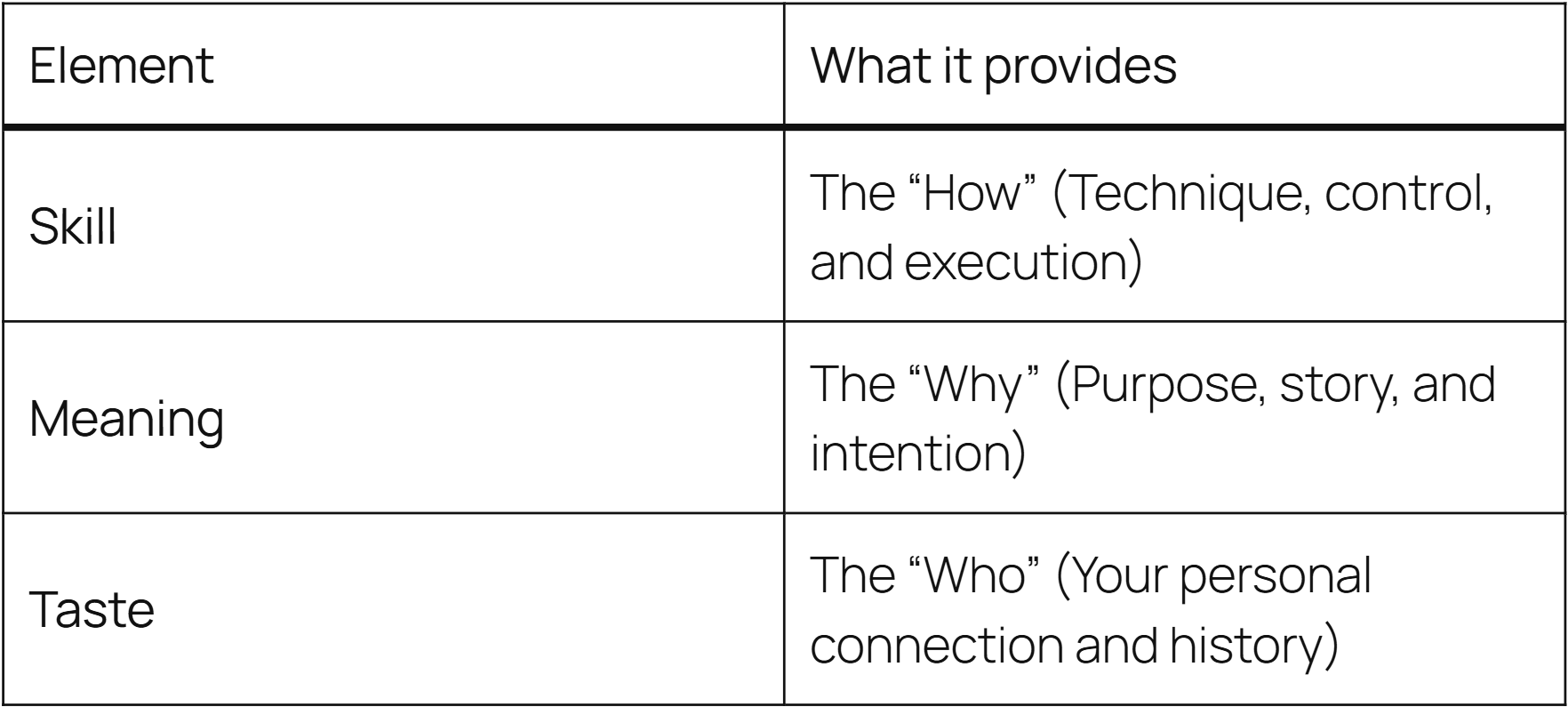
Good art usually shows up where skill meets meaning, then stirs in flavor.
It is unusual for just one thing to decide if art succeeds; usually, people judge it by how all three elements work together.
How to Apply This Understanding
When you look at art, try asking yourself:
Execution: Does the technique show clear choices? How do the details handle the overall piece?
Meaning: What story, message, or emotion does the piece convey?
Personal Connection: What emotions come up when I "taste" it? Does it remind me of something real in my life?
Focusing on each of these pieces lets your thoughts grow deeper than just saying what you like or hate at first glance.

Photo by Derwin Edwards on Pexels.com
Why this helps:
Appreciate art even if it isn’t “your style”
Discuss and describe art confidently
Develop a deeper connection through small gates
Great art isn’t some one-size-fits-all thing—instead, it grows from craft, intent, and what it makes you feel. Once you see those pieces fitting together, things start making more sense. Truth is, spotting talent doesn’t require a degree. Meaning shows up even when you’re not looking. Your personal preference? That counts just as much.