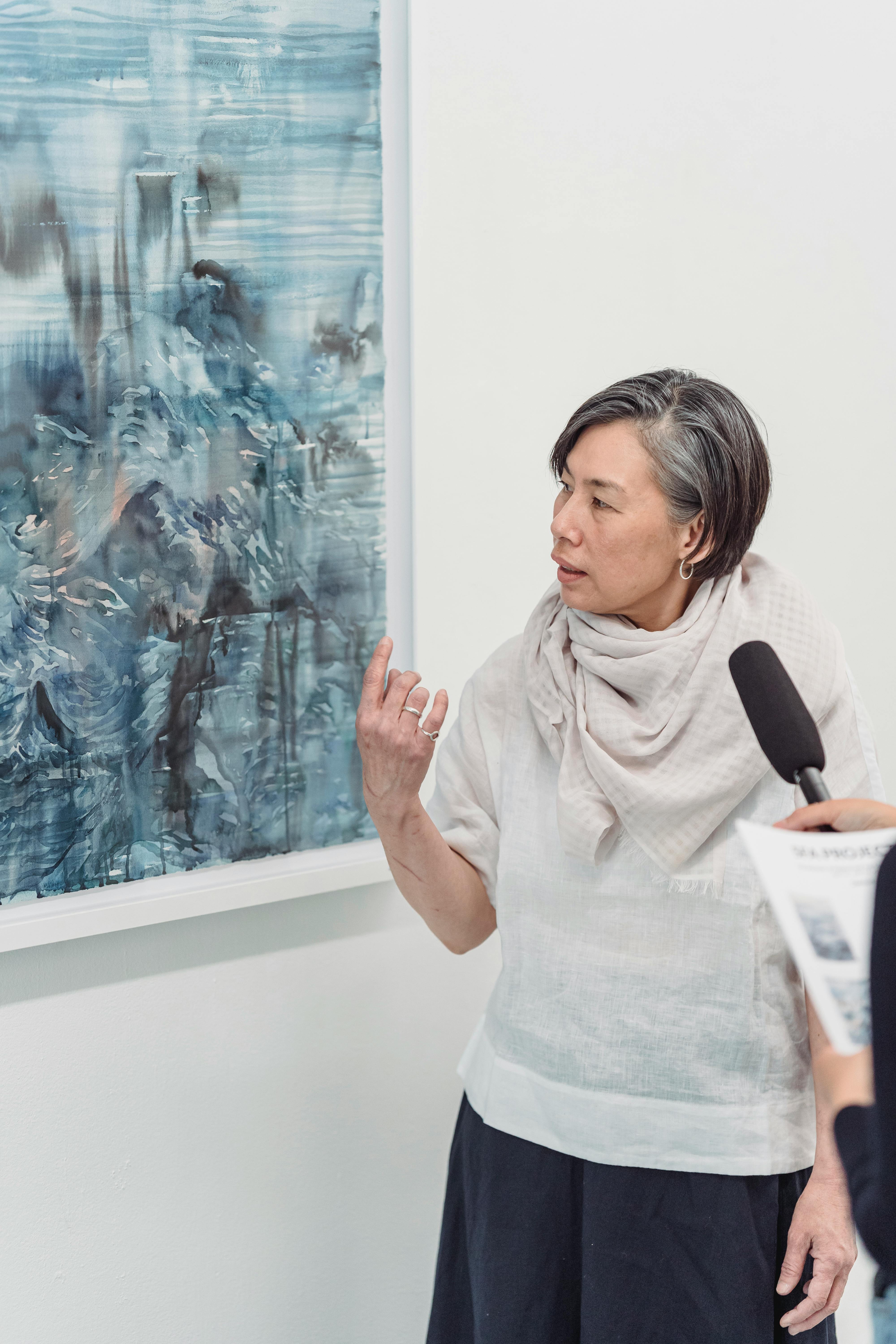
Something about art makes folks nervous, like they need permission just to speak up. It's common to hold back, worried you'll come across too strong—or worse, clueless.
Here's what matters: Not knowing each style, creator, or method won’t stop honest thoughts about artwork. Paying attention helps more than memorizing names. Wonder why something feels unsettling—try that. A clear mind sees patterns facts miss. Start anywhere. Simple questions often open wide doors.
Finding your voice matters when sharing thoughts. A steady rhythm keeps things clear without sounding stiff. Speaking plainly helps others hear what you mean. Staying grounded in honesty builds space for real talk. Letting warmth show makes even tough words land gently.
1. Look Before You Label
Seeing comes first when it comes to understanding a piece of art. Look at the way edges meet. Color blocks sit beside one another without blending. Forms stack off-center, tilted slightly. Surfaces show faint ridges where layers dried unevenly. The whole piece leans left, unbalanced on purpose.

Photo by Budget Bizar on Pexels.com
Hold back on conclusions: Watch instead. Let things unfold without rushing to understand.
See what shows up when you wait: Patience reveals more than guessing ever will.
Focus on facts, not opinions.
2. Use Descriptive Language
Notice what happens around you. That keeps your comments tied to real things, not just opinions. It stops them from coming across as criticism without reason. A painting might draw attention through color choices. What matters is how shapes interact across the surface.

Bleu, Blanc et Jaune (Blue, White and Yellow) by Piet Mondrian, 1932
Good: “The bright yellows and curved lines give the piece a lively, cheerful feeling.”
Weak: “It’s bad because the colors clash.”
Sure thing comes through when words paint what’s there, yet stay quiet about knowing more than they do. Critiquing is about clarity, not cleverness.
3. Consider Skill, Meaning, and Impact
A fresh look at what matters might start with skill—how it shows up, quietly. Meaning often follows, though not always in expected ways.
Art skill: Shows in how smoothly choices flow across the canvas. Technique becomes clear through steady control of tools and materials. Mastery hides in small decisions only experts notice.
Meaning: What feelings, thoughts, or tales come through in the piece?
Impact: What shifts inside you when eyes meet art? A quiet pull, maybe. Colors hum differently on your skin. Shapes press against thoughts they didn’t have before. The piece lingers long after looking away.
4. Frame Opinions as Personal Experiences
Notice how thoughts show up. Reactions live inside someone; they do not need to stand as facts for everyone. Owning the view without handing it down helps make feedback feel real without telling others how they should be.

Photo by rana aldemir on Pexels.com
Instead of: “This is the best painting in the gallery.”
Try: “I feel drawn to this painting because of the way it uses light and shadow.”
5. Connect with Context (Gently)
A brushstroke can hint at a time, a place. Details help, sometimes. Look at where the work began. Who made it? When? Why does that stick in your mind? Background noise may shape art quietly. Then again, maybe the colors speak loud enough on their own.
“This piece reminds me of Cubism because of the geometric shapes and multiple viewpoints.”
“The bright colors feel similar to Impressionist techniques, which often focus on light and atmosphere.”
6. The Power of Curiosity
Curiosity often begins with a question. Instead of stating opinions outright, try wondering out loud. A well-placed question eases tension while drawing people in.

Jan van Eyck's famous "The Arnolfini" Portrait, 1434.
“I wonder why the artist chose this muted color palette?”
“What effect does the rough texture have on the emotion of the piece?”
7. Find the Balance
What stands out might not always click. Still, look at what works along with where things feel thin.
Strengths: Technique, color, composition, concept.
Gaps: Words that trip readers up. Shapes that feel off. Parts that clash instead of flow. A message lost in noise.
8. Avoid the "Pretentious Trap"
Watch out for sneaky habits that make talk feel stuffy. Choose simplicity. Clarity matters most.
Overusing jargon: “The chiaroscuro interplay of complementary hues accentuates the juxtaposition of form.”
Acting as the “authority”: “Clearly, the artist failed to understand perspective.”
Assuming universal taste: “Everyone should feel moved by this piece.”
Conclusion: Practice Makes Progress
Doing it often helps you judge things better. Over time, spotting details gets easier when you keep going. Your eye sharpens simply by staying with it. Confidence follows practice.
To start today:
Notice details.
Articulate reactions.
Balance observation, meaning, and feeling.
Begin with something tiny. Choose a single part. Spend five minutes just watching it. Jot down what you see. Slowly, your words will grow sharper. With time, your voice fits into the discussion without effort—suddenly, every artwork feels alive in new ways.