Something happens when we look at art—suddenly there's joy, or a quiet sadness, even if nothing is said. Colors shift mood before thought catches up. Lines pull feeling out of nowhere. Shapes hold weight like memories. Meaning arrives sideways, not through speech. Emotion lives inside the way things are arranged. Why that works stays just out of reach.
What lies beneath might shift how you see paintings. A quiet moment with a sculpture could suddenly feel familiar.
The Power of Color

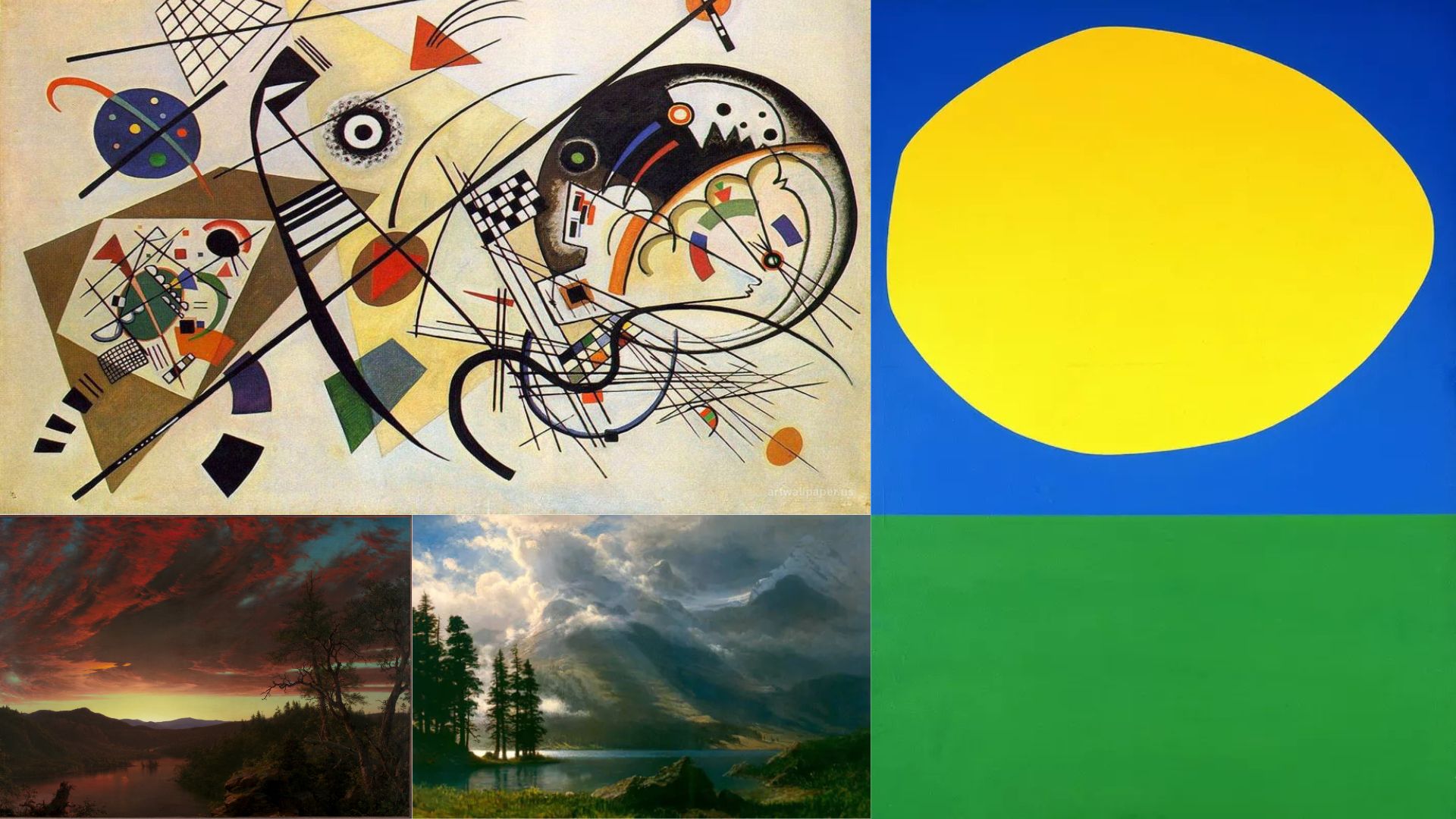
Left: "Twilight in the Wilderness" by Frederic Edwin Church (1860), Right: "Scenery in the Grand Tetons" by Albert Bierstadt (1865-1869)
A splash of red might stir your chest before you even think. Artists reach for hues like quiet whispers that grow loud. Each shade carries weight without saying a word. Feelings rise when blue pools in corners of a canvas. It isn’t just seen—it’s sensed deep down. A single tint can pause a breath mid-air.
Warm Tones: Fires burn red, orange, yellow—those shades tend to bring out liveliness. Sometimes they hint at deep feeling. Heat shows up in such tones. Energy pulses through them quietly. Passion lives inside their glow. Warmth is what people notice first.
Cool Tones: Blues, greens, and purples tend to bring about feelings of peace. Sometimes they carry a quiet sadness. Thoughtfulness shows up when these shades appear. A stillness lives inside them. Not loud—just soft echoes of reflection.
Saturation and Intensity: Bold hues stir energy, sometimes unease. Bright tones grab attention without asking first. Intense shades push feelings forward, unexpectedly sharp. Color volume turned up makes moments feel urgent.
Muted Tones: Quiet color choices often whisper more than they shout. A narrow range might carry a sense of old times, held-back feeling, or gentle nuance. Sometimes less gives room for thought instead of flash. Colors kept close can feel like memory fading at the edges.
Example: Take Van Gogh's Starry Night. Swirling blue mixes with sharp yellow, showing unrest alongside awe—peace within disorder. Movement hums beneath stillness there.
Most times, color isn’t just picked by chance. A painter selects each shade on purpose. This choice affects how a piece feels. Mood shifts based on these decisions.
Line and Shape: Expressive Movement

Left: A Wassily Kandinsky Painting "Transverse Line, (1923)", Right: An Ellsworth Kelly Painting "High Yellow, (1960)"
The way lines and shapes are used can convey emotional energy:
Sharp, Jagged Lines: Broken edges hint at unrest. A slant that bites suggests conflict lurking underneath. Uneven strokes unsettle the eye slowly. Points that pierce carry a quiet threat. Rough angles refuse to settle into calm.
Curves and Flow: Calm shows up where curves move slowly across the form. Grace lives in the way edges bend without rush. Harmony appears when nothing breaks the rhythm of connected shapes.
Structure: Geometric shapes → structure, order, or rigidity.
Organic Forms: Bending lines suggest comfort. Curves bring a feeling of ease. Rounded forms point to living things. Flowing edges carry a quiet warmth. Irregular contours feel close to nature.
With bold strokes, those Expressionist artists stretch shapes on purpose so feelings show clearly. Inside experiences become something you can see through twisted lines instead of smooth ones. Something moves, your eyes follow. Rhythm pulls attention, no story needed.
Composition: The Logic of Feeling

Photo by Huebert World on Pexels.com
Where things sit on the page shapes how we feel. The layout of parts in an artwork isn’t just about looks—it carries mood. A gap between figures might suggest distance, not emptiness. Crowded lines can press like tension. One shape off-center pulls the eye, then lingers in the gut. Placement speaks before words do.
Crowded or chaotic compositions → tension, anxiety, urgency.
Still spaces breathe slowly. Quiet arrangements suggest distance. Empty corners invite thought.
Asymmetry: Slanting strokes suggest energy. Uneven balance feels alive, unpredictable. Off-center designs create tension, a sense of things shifting. Angled forms push forward, never quite still.
Centered, symmetrical arrangements → balance, stability, control.
A shape might sit off-center, its color shouting quiet anger. Colors bump into one another, creating tension where nothing moves. One corner feels heavy, though no object rests there. Feeling builds through distance between forms, not through story. A smear of yellow doesn’t mean sunshine—it means urgency. Balance isn’t about symmetry; it hides in uneven weights.
Texture: Touch Without Contact

Photo by Marina Leonova on Pexels.com
How something feels can change how it makes you feel. Rough, smooth, soft—these details shape reaction without words. A surface might invite a hand or push it away. Even when touch is only suggested, the mind responds.
Rough/Aggressive: Spiky surfaces feel sharp. Uneven edges bring a sense of strain. Abrasive patterns unsettle the touch. Broken ridges create unease. Scratchy grain pushes against comfort.
Smooth/Soft: Calm comes through gentle touch. Softness brings ease into the moment. Delicacy lives in quiet surfaces that rest against skin.
Impasto: Thick paint builds up like layers, creating a sense of depth. Complexity shows through each uneven stroke. Turbulence hides beneath the surface, revealed only when you look close.
Thick layers of paint give the artwork a pulse—rough texture meets raw feeling. This isn’t just visual; it pulls something physical from viewers, like memory tied to touch. Roughness in an image can make skin prickle. Smooth shapes may feel calming, even when viewed on screen.
Light and Shadow: The Quiet Influence

David with the Head of Goliath, a painting by the Italian Baroque master Caravaggio
Mood shifts when shadows stretch across a scene. Where brightness falls changes how we feel about what we see. Dark corners pull attention just as much as bright spots do. What lingers in dim areas often speaks louder than what sits in full view.
Clarity: Light that's clear and steady often feels open. A space filled with balanced brightness can seem hopeful.
Drama: Strong contrasts (chiaroscuro) → drama, mystery, tension.
Intimacy: Low light often brings a quiet sadness. A soft glow can pull people closer. Shadows on the wall make thoughts turn inward.
Light slashes through dark in Caravaggio’s work, spotlighting raw emotion. Tension builds where brightness meets deep shade. Focus locks on faces caught in dramatic pause. Shadows stretch like silence before a shout.
Size and Scale: The Weight of Presence

Caspar David Friedrich’s "Wanderer above the Sea of Fog."
Big things feel heavy in your gut. Small shapes might seem quiet, almost whispering. When one object towers over another, it doesn’t just look larger—it presses down, harder.
Massive Scale: Towering shapes catch the eye first—weight behind their presence. Size here speaks louder than words ever could. What looms large often controls attention without trying.
Vastness/Emptiness: A person standing small beneath endless sky feels exposed. Out there, alone, the silence presses close. Wonder arrives quietly when scale shifts.
Distorted proportions → psychological tension or surrealism.
Key Insight: Size and scale aren’t just technical—they shape how we emotionally interpret a scene.
Movement and Gesture

Photo by cottonbro studio on Pexels.com
Flow or stance might show emotion. A still piece, through its pose, suggests movement. Feeling appears in how forms reach or pull back.
Curved, flowing gestures → grace, joy, fluidity.
Sharp, abrupt gestures → anger, fear, chaos.
Twirling shapes in art shaped by dance might stir a sense of motion, energy, or release. The mind treats pretend action like real action. It feels alive because perception acts fast. What moves—on paper or screen—gets felt in nerves.
Why It Works: A Silent Exchange
Feelings show up in colors, shapes, not sentences. A painting hits before thoughts catch up because eyes take in everything at once. This works through rhythm, balance, and contrast. Understanding comes sideways:
Engaging the senses
Triggering memory and association
Encouraging intuitive, emotional responses
Allowing personal interpretation
How to Engage Your Gut Reaction
Spot the elements: Start with color. Look at lines. Notice texture and layout.
Pause: Notice what shows up inside you. Feelings might appear without warning.
Feel first, think later: Meaning hides in tremors, not textbooks. Stare long enough and the piece breathes back.
Art talks through feelings, not speech. It reaches deep into what we see and sense. Picking up on these choices gives clarity and sharpens how you experience each piece.