Lost inside an art space or flipping through pages of paintings? It happens more than you think. Every artwork speaks differently, yet picking up just a handful of phrases helps clear the fog. Suddenly, seeing it, enjoying it, talking about it shifts—without pressure or pretense.
Pick up just a handful of ideas instead of every word, yet watch how quickly your understanding grows. A whole dictionary isn’t required when core notions open doors on their own.
1. Medium
A painter might pick oil paints, brushes, canvas. Tools shape how a piece comes alive on its surface. Sometimes it is charcoal on paper, sometimes ink pressed through metal. What matters sits in the hands during creation. Each choice leaves a different mark behind.
Oil: Paint made from oil comes in thick layers.
Watercolor: Water-based color flows smooth on paper.
Acrylic: A plastic-like medium dries fast under light.
Drawing: Pencil, charcoal, ink.
Sculpture: Clay, bronze, wood.
New Media: Digital tools.
Tip: Start by thinking about the material used—it reveals which methods could have been applied. What lies behind the surface often shows up in how it was built.
2. Composition
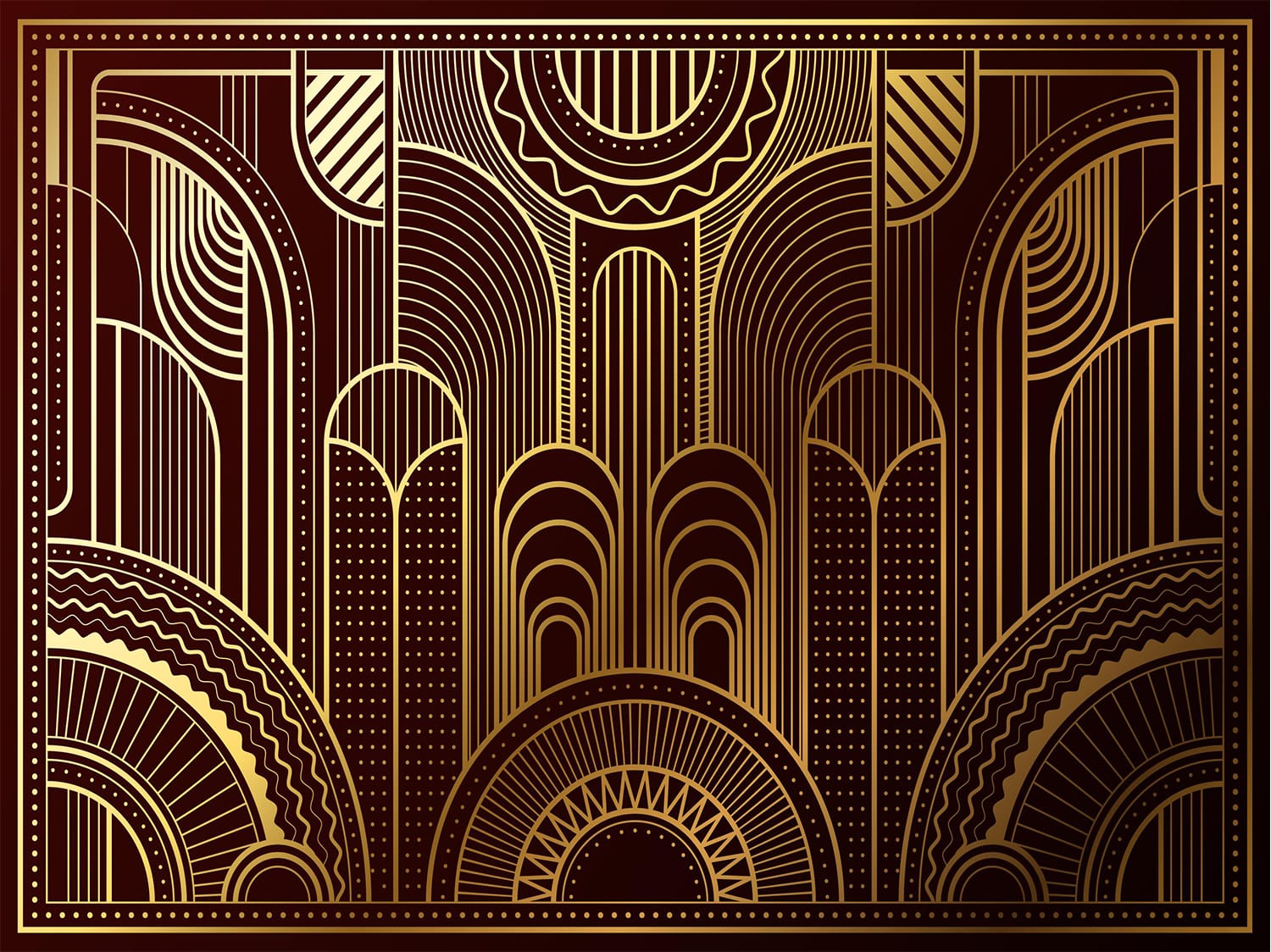
What makes a piece look balanced? It is where lines meet shapes, guided by color choices. Texture plays in, affecting how eyes move across surfaces. Space opens up, giving room for some parts to stand out more than others. One thing leads to another, creating flow without saying it outright. Arrangement matters, even if it feels natural at first glance.

A diagram that demonstrates the "Rule of Thirds", or strong symmetry.
Examples: Balanced vs. asymmetrical; Crowded vs. open.
Movement: Slanting strokes pull your eye across. Straight ones guide it left to right. Direction shapes how you follow. Angles add flow where flat lines march steady.
A shape here pulls attention before anything else does. Lines move you through the image without words. One corner might feel heavier than another. Space between objects sets a quiet rhythm. How things sit together changes how it feels. Balance comes from placement, never luck.
3. Line
A stroke stretches across space, changing its thickness, reach, or path. Not every one is drawn—some appear through suggestion alone. What matters is the trace it leaves behind.
Sharp/Jagged: Sharp edges bring discomfort. Tension lives in uneven lines. Conflict shows up when things do not fit smoothly together.
Curved/Flowing: Water slows when it finds stillness. Grace lives inside quiet moments. Peace arrives without asking.
Diagonal: Movement, energy.
Tip: Line can communicate emotion even without recognizable forms.
4. Shape and Form
Shape: Flat, 2D areas defined by edges.
Form: 3D objects that have volume.

Side-by-side comparison: A simple 2D circle (Shape) next to a 3D shaded sphere (Form)
Geometric: Squares, circles, triangles—these suggest precision. Order shows up in straight lines. Structure hides inside repeated patterns.
Organic: Natural, soft, fluid shapes.
5. Color and Value
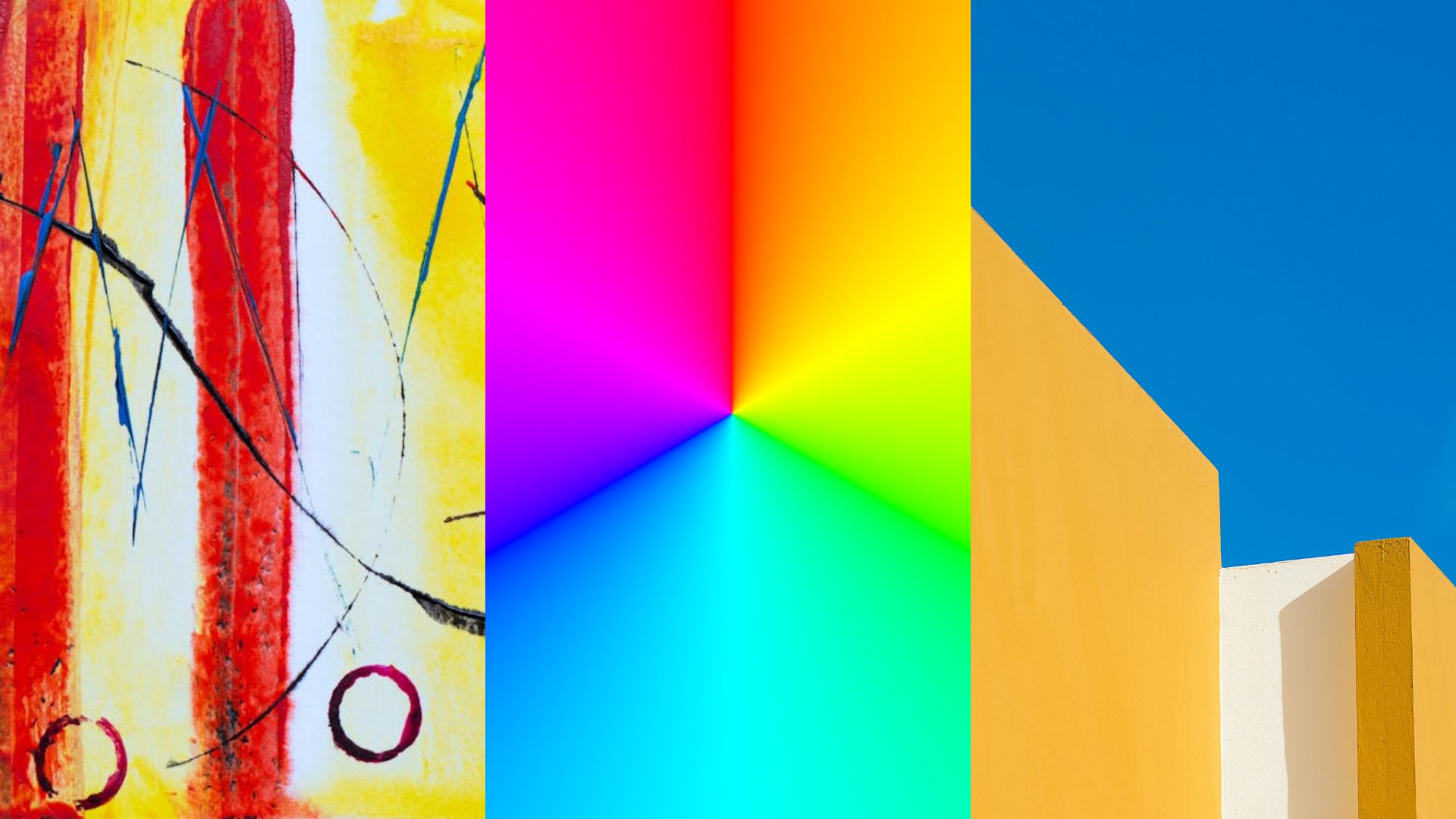
A single shade might shift from soft to bold depending on its surroundings. Light changes how deep or bright a color feels. Warm tones sit one way, cool ones pull differently. What matters is how it looks, not what it's called.
Value: Lightness or darkness of a color.
Warm Tones: Fire engine hues spark liveliness, drive. Crimson tones bring intensity, boldness.
Cool Tones: Still waters hum quiet thoughts. Pale shades sink into shadowed corners.
Contrast: Light against dark builds tension fast. Sharp differences catch attention without warning.
6. Texture
How rough or smooth something feels—that’s texture. Real if you can touch it, imagined if only seen. Not just how it looks, but what it suggests to the hand.

Photo by Polina u2800 on Pexels.com
Smooth: Serenity, refinement.
Rough: Intensity, raw emotion.
Layered: Complexity, depth.
Feel how roughness shows up in your mind, though fingers never brush it. A bumpy surface lives loud behind the eyes. Seeing grit pulls memory close, like cold glass against skin.
7. Perspective
A way to show how things look farther away? That’s perspective. It tricks your eye into seeing distance where there is none.
Linear Perspective: Take how straight paths seem to meet far away on the horizon. That spot where they almost touch? It’s called a vanishing point.
Atmospheric Perspective: Fading into the distance, things look paler, take on a bluish tint, lose sharpness. Miles away, shapes grow softer, colors drain toward gray, edges blur slightly.
8. Style and Movement
Expression lives in these details, quiet yet certain.
Realism: Precise portrayals of the real world.
Impressionism: Loose brushwork and light effects.
Abstract: Shapes without real-world references appear here instead of realistic ones.
9. Symbolism
Meaning lives in pictures when artists pick certain shapes on purpose. Symbols carry ideas through how they’re drawn, colored, placed.
![A classic "Vanitas" still life painting containing a skull or an hourglass to represent mortality, Harmen Steenwijck - Vanitas Still Life [c.1640]](https://artisansprints-rpfih.wordpress.com/wp-content/uploads/2026/01/54228032885_5753e773f4_o.jpg?w=1024)
A classic "Vanitas" still life painting containing a skull or an hourglass to represent mortality, Harmen Steenwijck - Vanitas Still Life [c.1640]
Dove: Peace.
Skull: Mortality.
Hidden Messages: Meaning grows when images point to older ideas. Symbols speak without words, yet say much more.
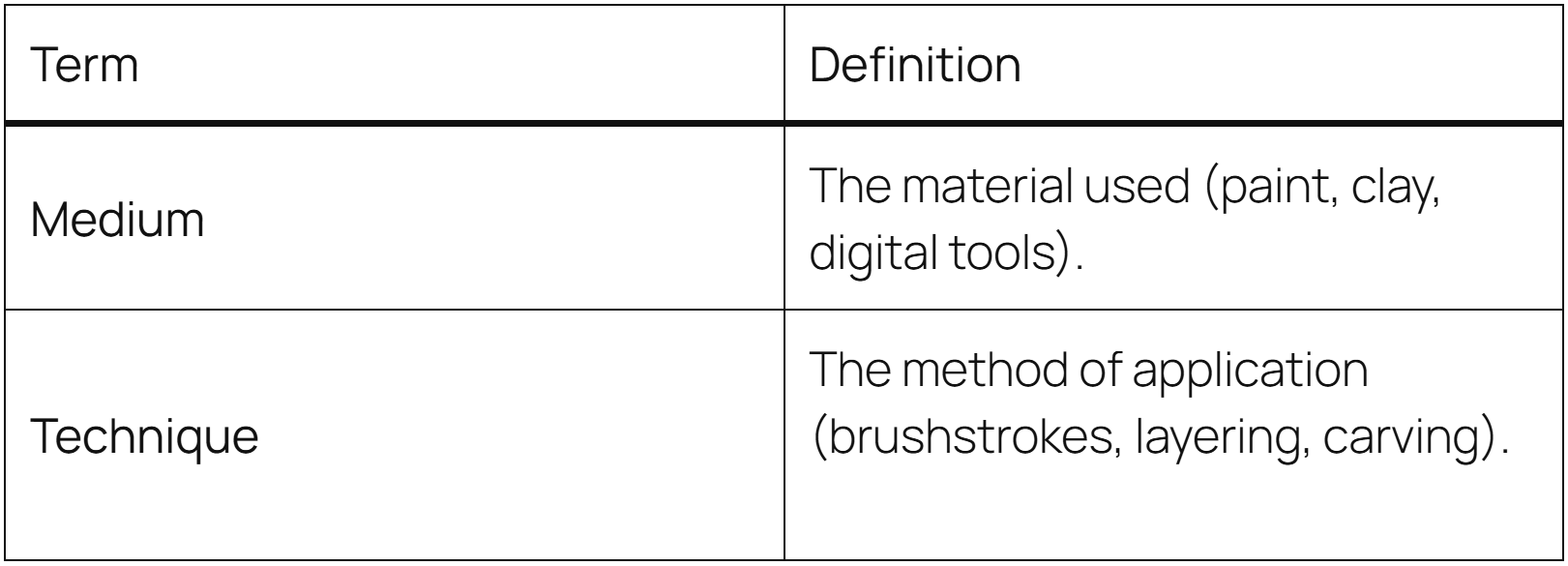
10. Medium vs. Technique
A closer look shows each plays a role in judging craft and creative decisions.
Composition Terms to Know
Balance: Distribution of visual weight.
Focal Point: Look here before anywhere else. This spot grabs attention fast.
Unity/Harmony: Cohesive, consistent elements.
Contrast: Opposing elements for interest or tension.
Rhythm/Movement: Visual paths guiding the viewer.
Historical Labels
Figurative: Art that depicts recognizable objects, especially human figures.
Contemporary: Art created roughly from the 1970s to today.
Modern: Art from ~1860–1970, focused on innovation and new styles.
Conclusion: How to Start
Start by watching closely. Pay attention to what shows up around you. Curiosity often begins where confusion ends—learning just a handful of art words can shift how you engage. These aren’t shortcuts to mastery. They’re quiet helpers that sharpen what you notice and deepen what you sense.
Begin with just a few words—choose three to five when you go to the museum again. Slowly, without trying too hard, your way of talking about art will grow.