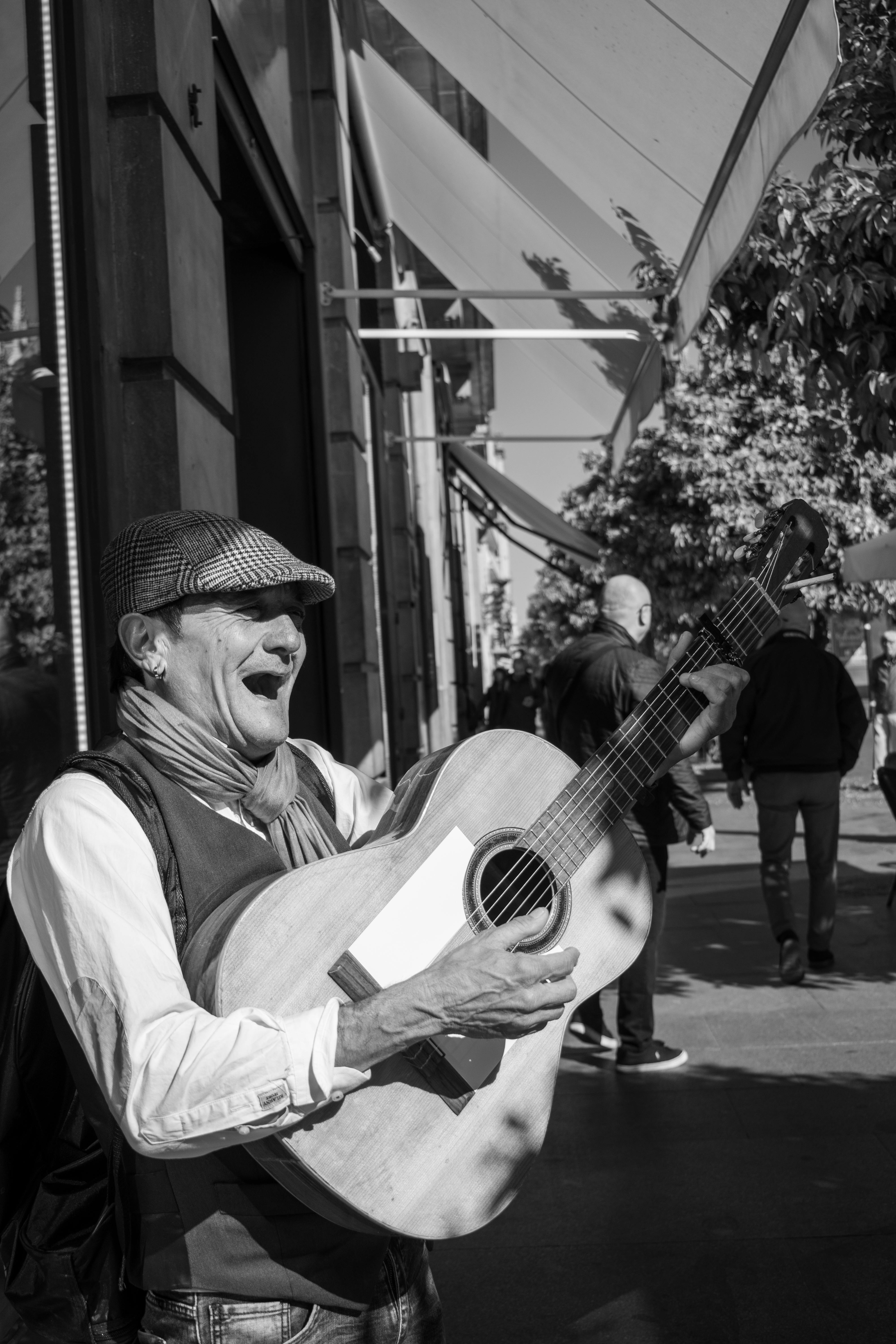
Who needs paintings when the lights might go out tomorrow? Beauty sits on shelves while survival takes center stage. Tough moments make color feel like a luxury. When food runs short, questions rise - what good is music if it cannot feed anyone. Museums gather dust during storms. A drawing won’t stop rain. Still, someone hums a tune beside a broken road.
Yet painting wasn’t something tossed in once survival was figured out.
From the start, grasping reality helped people live, adapt, make sense. Survival grew alongside insight, one feeding the other quietly. How we see things shapes what comes next, step after uneven step.
Long before words were written, people drew on stone walls - those marks still speak. Look at any era, anywhere, art shows up right away, shaping how we see things. One thing leads to another: feelings turn into colors, ideas become shapes. It sticks around because it does something deep inside us. Think about music that gives you chills or a painting that stops your breath. That is not decoration. The brain lights up differently when hit by rhythm or form. Culture carries it forward, sure. Yet there is more beneath the surface. What looks like play might actually be necessary.
The First Language

Photo by Alex Moliski on Pexels.com
Pictures came first, way before words on a page. Early people drew what they saw around them. These marks told stories without letters. Drawing was how thoughts got shared. Before alphabets, there were cave walls filled with meaning. Seeing mattered more than reading back then.
Pictures scratched into stone walls, marks cut deep by ancient hands, date back more than forty thousand years. Not just pretty images meant to fill empty spaces. More like early words used to share thoughts, hold on to memories, give shape to what mattered.
Art allowed early humans to:
Record experiences
Share knowledge
Express beliefs
Finding clarity when things feel unclear
Through pictures, beat, shape, it speaks where speech falls short. Not by letters, but by look and flow, meaning finds another path. Still now, pictures express what words often fail to hold.
A Mirror to Society
Paintings, music, stories - they hold up a mirror. What we create shows what matters to us. Sometimes quietly, art shifts how people think. A single image can echo through years. Culture feeds creativity, just as creativity reshapes culture. Moments of change often begin without noise.
Throughout history, art has:
Power grew stronger through images of kings, tied to visions of the divine
Challenged authority (political art, protest movements)
Documented daily life (Realism, photography)
Imagined alternative futures (speculative and conceptual art)
A brushstroke can stir what laws fail to touch. Movement begins where silence ends.
Art shifts as societies shift. Because society moves, so does what artists create. What appears on canvas or stage begins to nudge thoughts. Feelings tilt a little once colors and sounds rearrange. Behavior follows where expression leads. New forms quietly reshape daily life.
History Beyond Textbooks
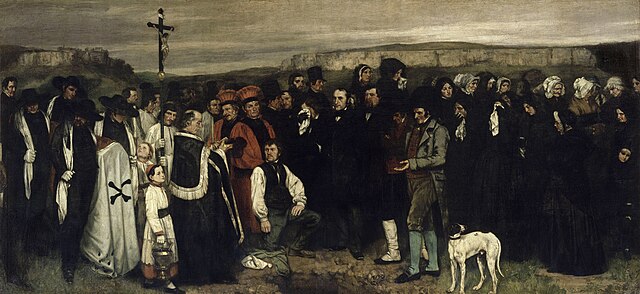
Gustave Courbet - A Burial at Ornans
Paintings capture moments textbooks often miss. When facts fade, emotions stay visible on canvas. What numbers can’t show, colors sometimes tell better.
Through art, we gain insight into:
What folks wore on their backs. Jobs they did every day. The way life unfolded in homes back then
Fear gripped some, while others found joy in the very same moment
Who got heard more - and who stayed silent
Facts tell what happened. Art shows how it felt to be there.
A single brushstroke might reveal what decades of history books miss. Moments frozen in music often speak louder than facts printed on paper. Snapshots hold truths that pages of dates never capture. Sound from old records carries weight textbooks lack. A melody hums clues no chapter can fully explain.
Giving Shape to Emotion
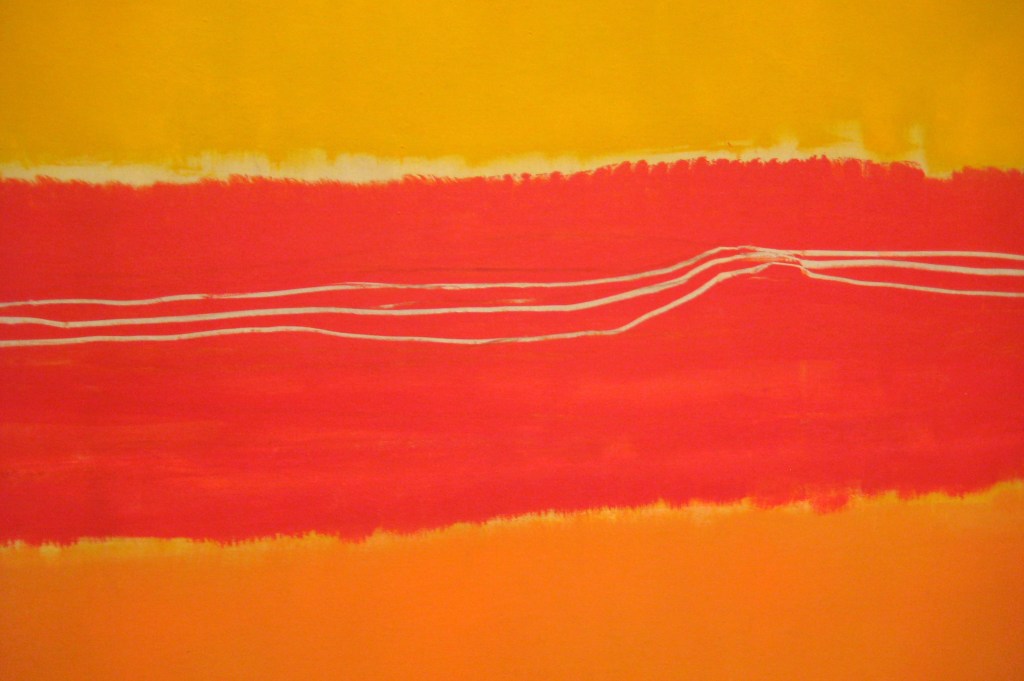
Mark Rothko's No.5/No. 22
Feelings can be messy, hard to put into words. Art gives them shape, a way through the confusion.
Art gives shape to:
Grief
Joy
Anxiety
Love
Anger
Wonder
That's the reason a painting might speak to you like an old letter. Sometimes, distance means nothing when colors echo your mood. A sculpture shaped long ago could mirror how you feel right now. Emotions slip across years without asking permission. Someone else’s moment becomes yours through quiet recognition.
A painting might show your sadness without a single word. Seeing it, you suddenly know that part of you exists outside your mind. Felt deep inside, that pull isn’t random. It’s what gives art its reason to be.
Your Brain on Art

Photo by Tara Winstead on Pexels.com
Looking at paintings wakes up different parts of the mind together. Music playing in the background lights up regions tied to emotion, memory, even movement. Seeing a sculpture might spark thought patterns linked to touch or space. When someone draws, it pulls in vision, hand control, and planning zones. Watching dance links motion centers with emotional responses. Even imagining colors triggers activity across neural networks. Creating something often involves surprise pathways too.
Staring at a painting might calm your thoughts. Creating something visual could shift how you feel inside. Art sometimes changes the way people see the world around them.
It can:
Stimulate emotional processing
Enhance memory and attention
Encourage pattern recognition
Increase empathy
What happens when lines meet emotion? Art sits right there, balancing rules with wild ideas. Thought links to sensation, not through force but flow. One feeds the other, like breath following step.
This could be the reason art works like it does:
Comforting
Disturbing
Inspiring
Transformative
This isn’t just watching. Engaging your mind and feelings changes how you take it in.
The Empathy Engine
A window opens when we look at art. It shows lives not like ours. Seeing these stories changes how we feel. Understanding grows quietly through images that speak without words.
Through art, we can:
See the world through another person’s eyes
Encounter unfamiliar cultures or identities
Pause inside tangled thoughts rather than grab quick fixes
Art won’t force everyone to see eye to eye - yet it quietly opens doors to seeing why others do. Seeing how others see things matters more than it seems. Without that skill, pieces just won’t fit together.
The Power of Discomfort
Hard questions live where paint cracks on canvas. Beauty does not always welcome you in artwork. Tough pieces exist by design. Comfort rarely walks through every gallery door.
Art can:
Ask uncomfortable questions
Expose injustice
Challenge norms
Refuse simple interpretations
This opens room to pause, instead of rushing straight into response. Still, art points at things we’ve overlooked. It won’t fix everything - just shows where to look.
You Don't Need to Be an Expert

Photo by Vlada Karpovich on Pexels.com
What you see as talent might just be practice. Some think creating art needs a special gift, so they step away from it. The truth? Skill grows more than most admit.
A brushstroke doesn’t need genius behind it - just a reason to land on canvas. What matters isn’t skill passed down through genes but what pushes someone to create anyway.
You don’t need to be an expert to:
Respond to art
Learn from it
It might change how you see things
A painting lives just as much in the eyes of someone standing before it. Meaning shifts, shaped by each moment a person meets it. This thought flows into pieces about viewing art, also questioning what gives art its value.
Why It Matters Now
A brushstroke can echo a lifetime. Yet it speaks to everyone who sees it. One person's vision becomes common ground through color, shape, thought. Moments lived alone find company in a painting. Culture grows where private feeling meets public view.
A single artwork can be:
A personal expression
A cultural artifact
A historical document
A political statement
What makes art last so long lies in how it builds up, piece by piece. Something quiet can still belong to everyone. While it feels close, it reaches far without trying.
Right now, when everything moves fast, art dares to slow us down. Amid endless noise, it quietly demands attention. Instead of answers, it offers questions. Where screens flood minds, it leaves space to feel. Not because it shouts loudest, but because it speaks differently. Its power isn’t in solving - it’s in pausing.
Attention.
Breathe first. Notice what's around. Let sensations arrive without rushing them. Thought follows when we allow it. Instead of chasing efficiency, just pause. Consumption takes a back seat here. Reflection shows up when invited.
Art matters because it reminds us:
That humans are more than data
Efficiency does not always come with that sense
Uncertainty holds its worth
That beauty and discomfort can coexist
Still, art won’t fix everything - yet it shows how we see the places we aim to change.
What remains? Art belongs in every life. It does not sit beside us like some extra thing. Instead it moves through moments, shapes feeling, becomes part of how we breathe.
Life finds meaning through moments like these. Finding purpose, linking with others, sharing feelings - art stays relevant while people do. It matters not for practical gain - yet stands vital at the core.